Okanagan Falls is moving from an unincorporated community within Electoral Area “D” toward a new municipal government. Residents will elect a mayor and four councillors on October 17, and the District of Okanagan Falls is scheduled to incorporate on November 6, 2026.[1][2]
That change matters to property decisions, but it should not be reduced to a quick prediction that taxes, services or home values will automatically rise or fall. Incorporation changes who will make certain local decisions and how responsibilities transition. The actual effect on one owner, buyer, development proposal or property budget will depend on future council decisions, service arrangements, adopted budgets and property-specific facts.
Official dates and service-transition periods matter. Confirm which authority, bylaw and service provider applies when a property decision is made.
GOVERNANCE
What changes on November 6—and what does not
The Province’s letters patent establish the District of Okanagan Falls, its boundaries, its council structure and the transition framework. The new council will consist of a mayor and four councillors, replacing the current model in which the community is represented through an electoral-area director.[1][2]
Municipal incorporation is primarily a governance change. It brings local responsibilities that have been divided among the Regional District of Okanagan-Similkameen and the Province under a municipal organization. The Province identifies water, sewer and land-use planning among regional-district functions, and roads, subdivision approval and property-tax collection among provincial functions involved in the transition.[1][2]
Land ownership does not change merely because the government structure changes. Existing titles, mortgages, easements, covenants, tenancies and property boundaries do not disappear on incorporation day. Buyers and owners still need the same property-specific legal, title, survey, zoning, servicing, insurance and financing review they needed before the transition.
The public boundary description also matters. The Province says the district boundary includes the private properties that were eligible to vote in the 2025 incorporation vote, except for two neighbouring parcels held by the Osoyoos Indian Band and its members.[1] A marketing address that says “Okanagan Falls” is not a substitute for confirming whether a parcel is inside the legal municipal boundary.
SERVICE TIMELINES
Services will not all move at once
The transition has several clocks. All regional-district services except water and sewer are scheduled to transfer at incorporation. The RDOS will continue managing and making decisions about water and sewer for three years, and it will deliver other municipal services under contract to the district during the first year.[1]
Provincial services will transfer except roads. The Ministry of Transportation and Transit is to maintain roads for five years after incorporation.[1] That does not mean every road, access or maintenance question has one answer: a buyer should still establish whether the access is public or private, who maintains it, and whether any easement, strata, bare-land strata or shared-road obligation applies.
RDOS has confirmed that parks within the community will remain in the District of Okanagan Falls after incorporation. It also said more information about water, wastewater and fire services would be shared as transition work develops.[3]
This staged approach is important for due diligence. A property may receive different services from different bodies during the transition. Owners should keep current utility notices, tax notices, service-area information and official updates rather than assuming the municipal name tells them who operates every system on a given date.
OWNERSHIP COSTS
Property taxes are a budget question, not a headline prediction
The Province explains that incorporation makes the municipality financially responsible for municipal services through taxes. It also says future costs and service levels will be determined as the new council sets priorities and budgets.[1][2]
Those two statements should be read together. Incorporation does not support a responsible promise that every owner’s total bill will immediately increase, decrease or remain unchanged. A tax notice can include charges from more than one authority, and the amount attached to a particular parcel depends on assessed value, tax rates, service areas, parcel taxes, utilities, exemptions and other applicable charges.
The Province has committed approximately $1.8 million for administration, the inaugural election and transition support. Including in-kind road-maintenance support, it describes the total provincial contribution as approximately $6.6 million.[1] That funding supports the transition; it is not a permanent forecast of operating costs or a credit that can be applied mechanically to an individual property’s future taxes.
For a buyer
Request the current tax notice, utility information and any service-area or parcel-tax details available for the specific property. Treat those as present evidence, not a guarantee of the next municipal budget.
For a seller
Disclose what is known accurately and avoid promising a buyer what the new council will do. Direct material transition questions to official sources and qualified legal or tax advice.
For a homeowner
Watch the district and RDOS budget process, service-transfer notices and utility communications. The next adopted rates and bills will be more reliable than generalized predictions.
LAND USE
Planning and subdivision decisions become more local
Development services will become a municipal responsibility under the policies and bylaws of the new council. The Province says the specific change to the development process is that subdivision approval will transfer from the Ministry of Transportation and Transit to the new municipal council.[2]
That shift may matter to owners considering a lot split, secondary suite, accessory building, redevelopment, change of use or other project. It does not create an automatic approval. Existing zoning, official-community-plan policy, servicing capacity, development permits, building-code requirements, environmental constraints and registered title charges still require review.
The safest approach is to verify the rule in force when an application is actually made. During a transition, an older webpage, saved PDF or verbal recollection may not identify the current approving authority. Ask the responsible office to confirm the applicable zoning, permit pathway, fees, required professionals and expected timing in writing.
Buyers looking at development potential should be especially cautious with conditional language. “Could be subdivided,” “suite potential” and “future development” are not approvals. Make the purchase decision using current written evidence and, where needed, advice from planning, legal, engineering, environmental, septic or financing professionals.
ACTION PLAN
A practical five-document check
- Boundary confirmation. Verify that the legal parcel is inside or outside the District of Okanagan Falls; do not rely only on the mailing address or listing-area label.
- Current tax and utility records. Obtain the latest property-tax notice, utility bills and parcel-tax or service-area information that applies to the property.
- Servicing evidence. Identify the actual water, wastewater or septic arrangement, road-access responsibility, fire-protection service and any private or shared obligations.
- Land-use evidence. Request current zoning and official-plan information, permits and written confirmation for any development claim material to the decision.
- Transition updates. Check the Province, the District/RDOS transition hub and election information close to the decision date because service responsibilities are moving on different schedules.[1][2][3]
For a purchase contract, the right conditions depend on the property and the buyer’s plan. A real-estate professional can help organize the questions, but legal interpretation belongs with a lawyer or notary, financing with the lender or mortgage broker, tax advice with the appropriate tax professional, and technical feasibility with the relevant qualified consultant and approval authority.
RICO’S VIEW
Treat the new district as a due-diligence event
The municipal transition is meaningful because local representation, budgeting, planning and service responsibility are changing. It can shape how the community makes decisions over time. It does not, by itself, establish the value of a house, guarantee a tax outcome or approve a development proposal.
For market value, use recent comparable sales, active competition and the property’s condition, tenure, lot, services and improvements. For ownership costs, use the actual tax and utility documents available today and update the assumptions when the district adopts new budgets or rates. For development potential, obtain written planning and technical evidence.
The most useful question is not “Is incorporation good or bad for real estate?” It is “Which responsibility, document or future decision could affect this particular property?” That framing turns a broad governance story into a manageable checklist for buyers, sellers and homeowners.
Use the guided Matchmaker → to compare current homes by community, property type and timing.
If your move begins with an existing property, visit Sell → for a property-specific planning conversation.
Or contact Rico → directly.
This article provides general real-estate information, not legal, tax, planning, engineering, appraisal, mortgage or investment advice. Municipal transition details can change. Confirm current boundaries, bylaws, service responsibilities, taxes, utilities, permits and professional-advice requirements for the specific property and decision date.
Sources
- Province of British Columbia — Okanagan Falls taking final steps to become a municipality
- Province of British Columbia — Municipal Incorporation Process for Okanagan Falls
- Regional District of Okanagan-Similkameen — Okanagan Falls and Electoral Area “D” update
- Wikimedia Commons — Black Sage – panoramio, Jack Borno photograph

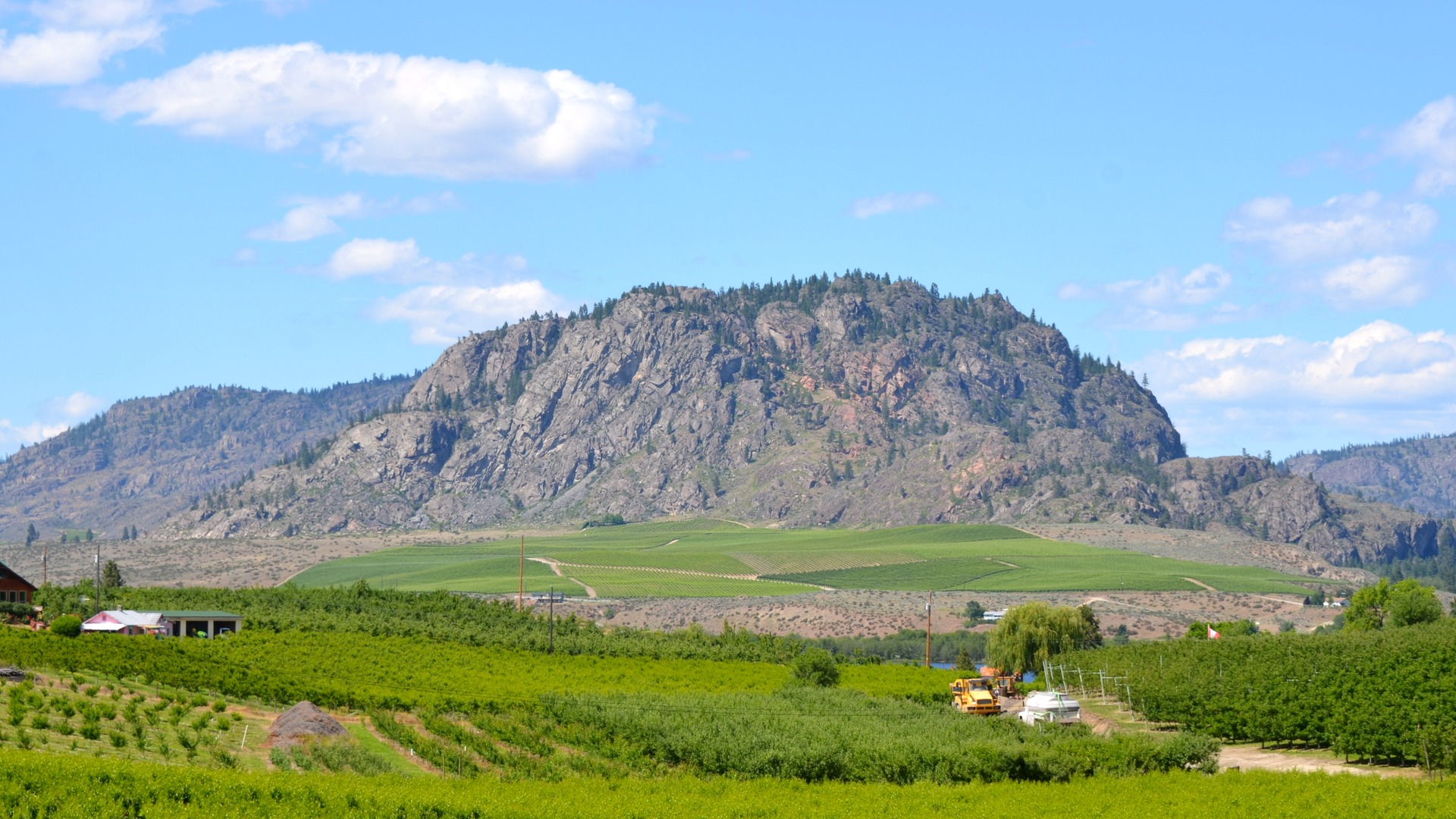
Image credit: Jack Borno, Wikimedia Commons, CC BY-SA 3.0. Representative Okanagan Falls landscape; not a listing and not a depiction of municipal boundaries or services.
Turn the information into your next step
Choose the path that matches the decision you are making now.
Planning a Penticton move? Explore Rico’s Penticton real estate guidance and current listings.