
Statistics Canada’s New Housing Price Index edged down 0.1% in August 2026 both nationally and in British Columbia.[1] That is a small monthly movement, but the more useful story for a South Okanagan buyer is what the index measures—and what it leaves outside the frame.
The index tracks changes in the selling prices agreed between builders and buyers for new single homes, semi-detached homes and townhomes while holding detailed specifications consistent between consecutive periods.[1] It does not measure every new dwelling, every resale, or the full amount a buyer will need at closing. It also reports builder selling prices before value-added taxes such as GST.[1]
Small price movement. Narrow measure. Property-specific decision.
NEW-HOME DECISIONS
Read the 0.1% movement at the right scale
A one-month decline of 0.1% is not a broad discount announcement. It means the measured index was slightly lower than in the previous month. It does not mean every builder reduced every price by 0.1%, nor does it establish that the price of a particular Penticton, Summerland, Oliver, Osoyoos or Keremeos home changed by the same amount.
The release offers national and provincial context. A provincial index combines markets with different land costs, construction pipelines, labour conditions, product types and buyer demand. The South Okanagan and Similkameen can move differently from the B.C. aggregate, and one development can move differently from the surrounding community.
The method matters. Statistics Canada compares prices while keeping detailed house specifications consistent from one period to the next.[1] That makes the index useful for tracking price movement over time. It is not designed to compare a finished townhouse with a presale condo, a serviced lot with a detached home, or a new energy-efficient build with an older resale property.
The August index is also not seasonally adjusted and is not subject to revision.[1] Buyers should therefore resist treating a single monthly change as a turning point. A small movement can be useful context, but a purchase decision still depends on the exact home, contract, completion timing, financing and alternatives available now.
NEW-HOME DECISIONS
Know which homes the index covers—and which it does not
The release names new single homes, semi-detached homes and townhomes, also described as row or garden homes.[1] That definition is narrower than the everyday phrase “new housing.” The headline should not be read as a complete measure of apartment-style condominium prices or the entire new-construction market.
It also does not measure resale homes. A five-year-old townhouse, a renovated detached home and an older condo can compete with a new project, but their prices are established in a different market. Buyers comparing new and resale options should build a side-by-side property list rather than assuming one national or provincial index describes both.
Start with the form of ownership and construction stage:
- Completed new home: inspect the finished property, warranty information, deficiencies, title, disclosure documents and final closing costs.
- Presale or under construction: examine the disclosure statement, amendment history, estimated completion window, deposit schedule, assignment terms, cancellation rights and delay provisions with a lawyer.
- New strata: review the proposed or current budget, strata fees, insurance, bylaws, parking, storage, common-property obligations and any phase-development arrangements.
- Resale alternative: compare condition, remaining useful life of systems, immediate repairs, renovation permissions and the strength of available documents.
The correct comparison is rarely “new versus old” in the abstract. It is one specific property and contract against the best realistic alternatives that fit the buyer’s location, budget, timing and maintenance tolerance.
NEW-HOME DECISIONS
Separate the advertised price from the cash required
Statistics Canada says the prices collected for the index exclude value-added taxes such as GST.[1] A buyer’s real closing calculation cannot stop at the advertised base price.
Ask for a written schedule that separates:
- base purchase price;
- GST and whether any rebate is assumed in the marketing price;
- upgrades, appliance packages and change-order charges;
- parking, storage, landscaping or other separately priced components;
- property-transfer tax and any exemption assumptions;
- legal, inspection, appraisal and financing costs;
- strata contributions, utility connections or adjustments;
- moving, window coverings and immediate furnishing needs; and
- a reserve for deficiencies, delays or expenses that arrive after possession.
A promotional credit is not the same as a lower base price. Free upgrades, a temporary strata-fee credit, a deposit incentive or an interest-rate promotion can have real value, but each should be written into the contract and valued separately. Buyers should understand whether the incentive affects financing, appraisal, GST, resale comparables or the amount due on completion.
For a fair comparison, calculate the net effective cost of each option and keep cash timing visible. A lower advertised price can still demand more cash before completion. A higher-priced finished home may provide more certainty about the actual space, view, condition and possession date.
NEW-HOME DECISIONS
Treat local supply plans as a pipeline, not today’s inventory
Penticton’s North Gateway plan targets a mix of apartments and townhomes and describes a long-range capacity of 1,750 to 2,250 new residential units.[2] The same City page says the area is expected to build out over 10 to 20-plus years.[2]
Those numbers provide useful planning context, but they are not a count of homes available today. A planning target can move through many stages: policy, rezoning, development permit, building permit, financing, presales, construction, occupancy and resale. Not every proposed unit becomes a completed home on the original schedule.
For buyers, the practical question is not simply how many units are envisioned. Ask what is approved, what has a building permit, what is under construction, what is complete and what can actually be purchased. Then assess how the surrounding roads, services, amenities and construction activity may change during the planned ownership period.
For homeowners and sellers, future supply can create both competition and neighbourhood investment. The effect is usually uneven and delayed. A new townhouse project may compete more directly with nearby townhomes than with rural acreages or waterfront detached homes. Unit size, tenure, fees, finish level, parking, completion timing and affordability determine which properties truly compete.
A provincial 0.1% monthly index change does not establish the value of an existing South Okanagan property. Current value is grounded in relevant local comparable sales, active competition, condition, location, features and buyer response—not one macro release.
NEW-HOME DECISIONS
Presale financing deserves its own timeline
A presale buyer can sign long before the lender advances mortgage funds. That creates timing risk that a price index cannot show.
Map the transaction in stages:
- Deposit dates: know each amount, due date, trust arrangement and refund condition.
- Rate hold: confirm how long it lasts and whether it will survive the expected completion window.
- Qualification: a lender may reassess income, debt, credit, employment, the property and program rules before funding.
- Appraisal: the lender applies its own appraisal and lending criteria; the contract price does not guarantee the appraised value.
- Closing funds: preserve enough cash for the down payment balance, taxes, legal costs, adjustments and a post-closing reserve.
- Delay scenario: decide how rent, a current mortgage, bridge timing or a sale of another home would be handled if completion moves.
For homeowners using equity toward a future purchase, equity means the current property value minus debt secured against it. One national or provincial release does not create or erase that equity. The lender still determines available borrowing after its appraisal, loan-to-value limits, qualification rules and review of the borrower’s full position.
Do not make a presale commitment depend on one hoped-for outcome: a lower rate, a higher appraisal, a perfectly timed sale or an uninterrupted income path. A resilient plan has room for at least one variable to move against expectations.
NEW-HOME DECISIONS
What this means for you
NEW-HOME DECISIONS
A ten-question new-home comparison
Before signing, ask:
- What exact home type and ownership structure am I buying?
- Is the property complete, under construction or a presale?
- What is included in the base price, and what is extra?
- Is GST included, excluded or shown after an assumed rebate?
- Which incentives are contractual, and when do they expire?
- What deposits and closing funds are required, and on what dates?
- What happens if construction or occupancy is delayed?
- What will the lender recheck before funding, and when can the rate hold expire?
- Which completed new and resale homes are realistic alternatives today?
- What cash reserve remains after closing?
The August data does not signal that buyers should rush or wait. It says the measured selling price of covered new-house types edged down 0.1% nationally and in B.C. during one month.[1] The better response is to improve the comparison: identify the correct property type, verify the contract price and incentives, map financing through completion, and test the decision against local alternatives.
Use the guided Matchmaker to compare communities, property types and price ranges. If a new project may affect your selling plan, visit Sell, or contact Rico for a property-specific real-estate conversation.
This article provides general real-estate information, not legal, mortgage, tax, accounting, appraisal, construction, engineering, insurance, investment or financial advice. Statistics Canada figures are national or provincial aggregates and may not describe a particular community, development or property. Obtain independent legal advice on contracts and disclosure documents, and confirm financing directly with your lender or mortgage broker.
Sources
- Statistics Canada — New Housing Price Index, August 2026
- City of Penticton — North Gateway Plan
- Wikimedia Commons — Wood-frame condominium construction in Fernie, British Columbia

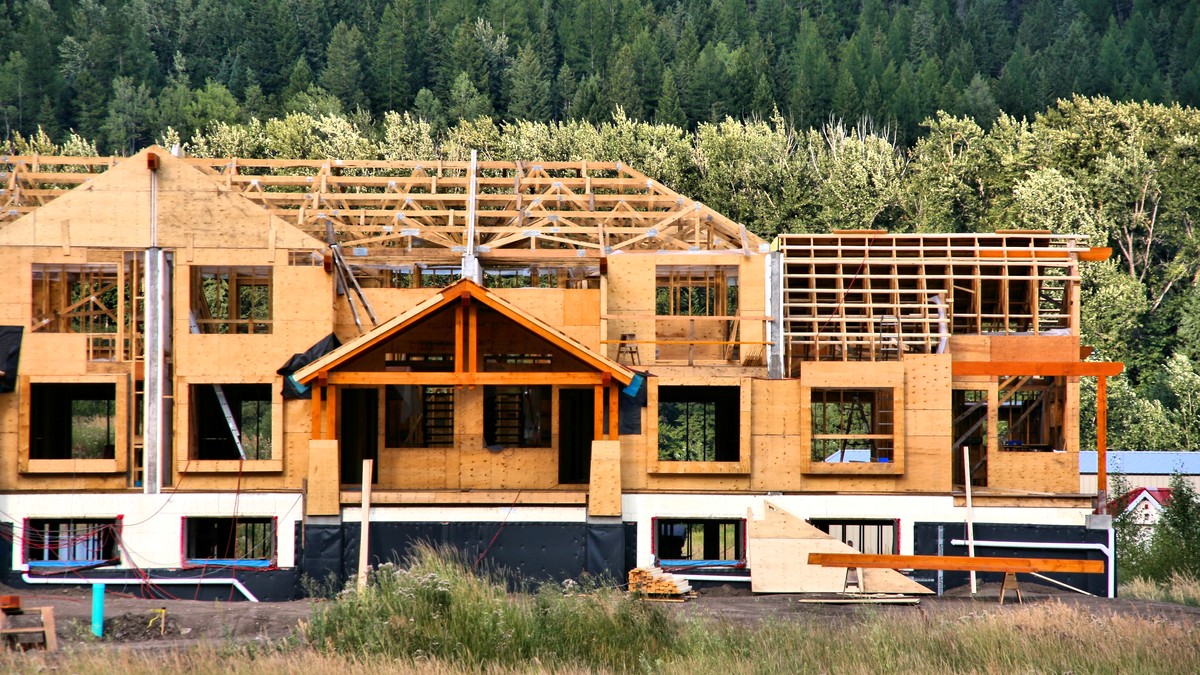
Image credit: Marek Ślusarczyk, Wikimedia Commons, CC BY 3.0. Wood-frame condominium construction in Fernie, B.C.; representative provincial construction image, not a South Okanagan project or listing. Cropped and lightly contrast-adjusted.
Turn the information into your next step
Choose the path that matches the decision you are making now.
Planning a Penticton move? Explore Rico’s Penticton real estate guidance and current listings.