Canada’s federal prohibition on many non-Canadians buying residential property is scheduled to end on January 1, 2027. From September 27, that date is 96 calendar days away. The federal rule currently applies within census metropolitan areas and census agglomerations.[1][3][7] Statistics Canada classifies Penticton as a census agglomeration.[4]
That does not mean every newcomer is barred from buying, every South Okanagan property is covered, or a wave of new demand will arrive on January 1. Citizenship or permanent-resident status, the buyer’s legal structure, the exact property, its location and a series of exemptions all matter. The practical job is to identify those facts early and obtain legal advice when the rule may apply.
A deadline, a geography test and a legal-status test.
CURRENT TIMELINE
What the January 1 date actually means
The federal government extended the temporary prohibition by two years, and the extension received Royal Assent in June 2024. The official wording says the ban applies until January 1, 2027.[1][7]
For a transaction being planned now, that is the current legal timeline—not a promise about what Parliament or the federal government may do next. Rules can be extended, replaced or amended. A buyer should not sign a contract in 2026 on the assumption that a closing in 2027 automatically avoids the Act, because the legal analysis can depend on when the buyer acquires an interest, what the agreement says and what law is in force at the relevant time.
The Act defines a purchase broadly through the regulations as acquiring a legal or equitable interest in residential property, with or without conditions.[3] This is one reason a completion date alone should not be used as a shortcut. Buyers, sellers and real-estate professionals should send any uncertain citizenship, residency, corporate-control, trust, assignment or timing issue to a qualified lawyer before commitments become difficult to unwind.
The countdown is useful because it creates a review point. It is not useful as a market forecast. No official source reviewed for this article provides a South Okanagan estimate of how many buyers are currently affected or how many would enter the market if the rule expires.
BUYER STATUS
Who is—and is not—a “non-Canadian” under the Act
The federal definition is narrower than everyday phrases such as “foreign-born” or “newcomer.” Canadian citizens, people registered as Indians under the Indian Act and permanent residents are not “non-Canadians” for this prohibition.[2]
The definition can also capture corporations or entities. A corporation formed outside Canada can be caught, while a privately held Canadian corporation or entity can be caught when the prescribed non-Canadian control test is met. The regulations currently set the direct or indirect ownership or voting threshold at 10%, while also recognizing control in fact.[3][8]
There are important personal exceptions. The Act and regulations include protected persons, some temporary residents and some purchases with an eligible spouse or common-law partner. Under the amended work-permit rule, a buyer can qualify if the permit or authorization has at least 183 days of validity remaining on the purchase date and the buyer has not purchased more than one residential property while the prohibition is in effect.[3][8][9]
Those are legal eligibility tests, not marketing labels. A work permit does not automatically settle the issue, and a buyer should not rely on a listing agent or seller to interpret immigration or corporate documents. A lawyer can review the current Act, regulations, status documents, ownership structure and transaction.
PROPERTY TEST
Which homes can be covered
The Act’s residential-property definition includes a detached house or similar building containing no more than three dwelling units. It also includes a semi-detached house, rowhouse, residential condominium unit or similar premises intended to be owned separately.[2]
That means the rule is not limited to luxury houses or investor condominiums. Depending on the facts and location, it can be relevant to an ordinary detached home, duplex or triplex, townhouse or strata apartment.
The definition should not be stretched to every form of real estate. Buildings with more than three dwelling units are outside the Act’s stated one-to-three-unit definition.[2][3] The amended regulations removed vacant land from the prohibition and created an exception for acquisition for development purposes.[8][9]
The regulations exclude some acquisitions from the meaning of purchase, including interests arising from death, divorce, separation or a gift, renting a dwelling for the tenant to occupy, certain pre-existing trusts and a secured creditor’s exercise of a security interest.[3] Each exception has wording and facts that should be reviewed rather than paraphrased into a do-it-yourself rule.
LOCAL BOUNDARY
Why Penticton’s geography is the surprising part
The federal rule is location-dependent. The regulations exclude property outside a census metropolitan area or census agglomeration.[3] Penticton is formally identified by Statistics Canada as census agglomeration 59913.[4]
The 2021 statistical classification lists the City of Penticton, Okanagan-Similkameen electoral areas D, I and F, and Penticton 1 within that census agglomeration. It associates places including Okanagan Falls, Kaleden, Apex Mountain, West Bench, Carmi, Trout Creek and other named areas with those subdivisions.[4]
That list is a statistical geography, not a substitute for checking a parcel. A community name, postal address or casual description such as “near Penticton” may not prove whether the property is inside the applicable boundary. The exact address should be matched against the current official geography and reviewed with the legal professional handling the transaction.
The same caution applies across the broader South Okanagan and Similkameen. The federal prohibition does not simply follow the Regional District boundary, a real-estate board district or the service area of this website. Some properties may be inside a qualifying census area and others outside. Location must be verified, not inferred from a regional label.
What this means for you: Before discussing an exemption or a January closing, establish three things in order: the buyer’s legal status and structure, the exact property type, and the property’s official census geography. If any one of those is uncertain, treat the federal rule as unresolved until a lawyer confirms it.
TAX DISTINCTION
Do not confuse the federal ban with B.C.’s foreign-buyer tax
The federal prohibition and British Columbia’s additional property transfer tax are separate systems. Different laws, areas, definitions and exemptions can apply. Passing one test does not prove that the other is irrelevant.
B.C.’s current additional property transfer tax page lists a 20% tax in five specified areas: the Capital Regional District, Fraser Valley Regional District, Metro Vancouver Regional District, Regional District of Central Okanagan and Regional District of Nanaimo.[5] The Regional District of Okanagan-Similkameen is not on that current list.
That distinction is particularly important in the Okanagan. “Central Okanagan” and “South Okanagan” are not interchangeable tax areas. A rule that applies to a Kelowna-area purchase should not be copied automatically to a Penticton-area purchase, and the absence of the provincial additional tax from a location does not cancel the federal prohibition if the federal tests are met.
Ordinary property transfer tax, GST on some new homes, the federal Underused Housing Tax, B.C.’s speculation and vacancy tax and other tax or reporting rules are also separate questions. Buyers should have the conveyancer, accountant or tax lawyer identify which rules apply to the exact purchaser and property rather than relying on one broad “foreign buyer” checklist.
TRANSACTION STEPS
What changes for offers, listings and closings
For buyers, the status question belongs near the start of the search. If a purchase may engage the Act, confirm eligibility and geography before spending heavily on inspections, appraisals, financing work or a deposit. Include the lawyer early enough to advise on contract language, evidence and timing.
For sellers, citizenship should not become a screening shortcut or a reason to make assumptions about a person’s eligibility. The Act contains exceptions, and many immigrants are Canadian citizens or permanent residents. The useful approach is neutral: have the contract and professional process address compliance, then direct legal-status questions to the appropriate advisers.
For both sides, a violation does not automatically invalidate the sale. The Act says the sale remains valid, but a conviction can lead to a fine of up to $10,000, and a court may order the property sold. The Act also reaches a person or entity that knowingly counsels, induces, aids or abets a prohibited purchase.[2]
That combination makes casual assurances risky. A seller should not accept “the ban is almost over” as legal confirmation. A buyer should not rely on a verbal opinion that a work permit, corporation, family relationship or rural-looking address creates an exemption. Written professional advice should match the current facts and law.
AUDIENCE GUIDE
What this means for you
NEXT STEPS
A practical 96-day checklist
- Identify the buyer. Record citizenship, permanent-resident status, temporary status and any corporation, partnership, trust or beneficial owner involved.
- Identify the property. Confirm whether it is a separately titled condominium, townhouse, detached home or a building with a particular number of dwelling units.
- Map the exact address. Verify whether the parcel is inside the current Penticton census agglomeration or another census metropolitan area or census agglomeration.
- Test exemptions with counsel. Do not rely on a summary when the purchase depends on a work permit, spouse, protected-person status, development purpose, gift, estate or other exception.
- Separate federal and provincial rules. Review the federal prohibition, B.C. property transfer taxes and any other relevant tax or reporting obligation independently.
- Recheck before commitment and completion. The law can change before January 1. Confirm the current rule when the offer is written and again before closing.
- Avoid market predictions from the date alone. Use current South Okanagan comparable sales, active listings and buyer activity to make a property decision.
Want to compare current South Okanagan homes by location, property type and budget? Start with the Matchmaker. Planning to sell? Review the seller path. For a property-specific real-estate conversation, contact Rico.
This article provides general real-estate information, not legal, immigration, tax, appraisal, financing or investment advice. Rules and official boundaries can change. Obtain advice from qualified professionals for the exact buyer, property and transaction.
Sources
- Department of Finance Canada — two-year extension announcement
- Justice Laws — Prohibition on the Purchase of Residential Property by Non-Canadians Act
- Justice Laws — accompanying Regulations
- Statistics Canada — Penticton census agglomeration 59913
- Province of British Columbia — additional property transfer tax areas
- Wikimedia Commons — 2018 05 30a Penticton Morning Walk 28
- Department of Finance Canada — extension received Royal Assent
- BCFSA — amended federal regulations advisory
- CMHC — amended regulations announcement
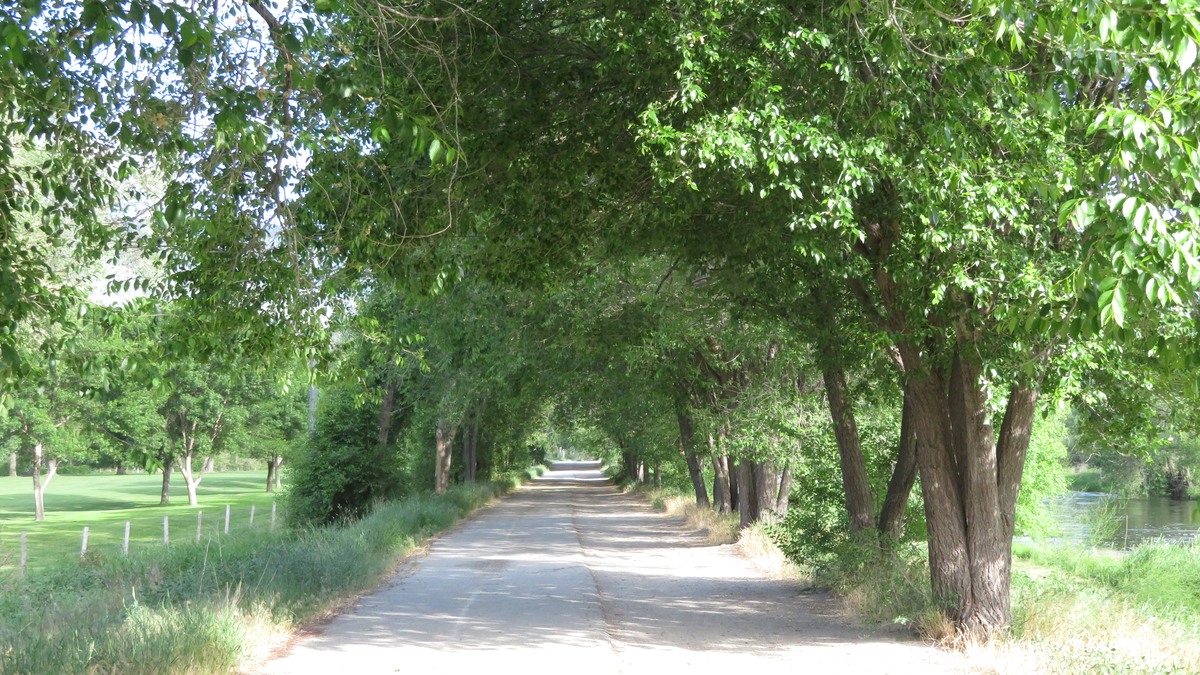
Image credit: Blake Handley, Wikimedia Commons, CC BY 2.0. Representative tree-lined public path in Penticton; not a listing, purchaser or evidence of current market activity. Cropped and lightly contrast-adjusted.
Turn the information into your next step
Choose the path that matches the decision you are making now.
Planning a Penticton move? Explore Rico’s Penticton real estate guidance and current listings.