
Thousands of British Columbians who bought homes in 2025 are now entering the second year of ownership.[1] That creates an easy trap: a home held for more than one year can still be inside B.C.’s 730-day home-flipping-tax window, even though the provincial rate starts declining after day 365.[1][2]
The rule applies to profit from disposing of taxable B.C. residential property, including certain rights to acquire property such as presale contracts, when the property was owned for fewer than 730 days.[1] It took effect January 1, 2025, but property acquired before that date can still be caught if the sale occurred after the effective date and the holding period was short enough.[1]
This is not a tax on the full sale price, and selling within two years does not automatically mean tax is owing.[1][2] The calculation starts with net taxable income, exemptions can apply, and some exemptions still require a separate provincial return.[2][3][4] The useful planning move is to count the days correctly before accepting a closing date—not after the deal is firm.[6]
One year of ownership does not end B.C.’s provincial home-flipping-tax window.
THE CLOCK
The second year is not automatically clear
B.C.’s rule uses a 730-day threshold.[1] If a taxable property is disposed of within 365 days, the provincial rate is 20% of net taxable income.[1][2] From day 366 through day 729, the rate gradually declines under a statutory formula.[1][2] After more than 729 days, the provincial home-flipping tax no longer applies.[1][2]
That means the first anniversary is not a finish line.[1][2] A seller at 14, 18 or 22 months may face a lower rate than a seller inside the first year, but the rate is not necessarily zero.[2] A seller should not use phrases such as “owned for two calendar years” or “bought in 2025 and selling in 2026” as substitutes for the actual day count.[6]
The tax applies to profit, not gross sale proceeds.[1][2] The Province’s calculation starts with proceeds from the disposition, minus the cost to acquire the property, minus qualifying costs to improve the residential property.[2] A qualifying primary-residence deduction can then reduce taxable income before the rate is applied.[1][2]
For illustration only, suppose a seller has $80,000 of taxable income before a qualifying $20,000 primary-residence deduction and disposes of the property after 500 days.[1][2] The provincial formula produces a rate of about 12.603%; applied to $60,000 of net taxable income, that would be approximately $7,561.64.[2] Real calculations depend on the facts, documents and statutory definitions, so a tax professional should prepare the actual estimate.
CLOSING DATES
Closing dates usually drive the day count
The Province says the ownership count starts on the day the taxable property is acquired and ends on the day it is disposed of.[6] For most ordinary purchases and sales, those dates are the completion or closing dates: when the buyer pays and ownership transfers, and when the seller becomes entitled to receive the sale money.[6]
The listing date, accepted-offer date, subject-removal date and possession date may all matter commercially, but they are not automatically the acquisition or disposition date for this tax.[6] A contract that closes on day 728 can produce a different provincial result from one that closes after more than 729 days, even if the marketing and negotiation occurred during the same week.[2][6]
Do not move a closing date solely because of a general article. Financing, bridge arrangements, tenancy, vacant possession, strata documents, insurance, legal obligations and the buyer’s needs all matter. Instead, have the conveyancer and tax adviser confirm the acquisition date, proposed disposition date, counted days and any exceptional rules before the contract becomes unconditional.
Presales need special attention.[1][6] The Province generally treats the date a buyer enters into and pays for the presale contract as the acquisition date.[6] If that buyer later completes on the finished home, the earlier contract date can continue to be the acquisition date for this tax.[6] An assigned presale has its own timing rules, so the building-completion date alone may give the wrong answer.[6]
PRIMARY HOME
A principal residence is not a blanket exemption
Calling a property “my home” does not automatically remove the B.C. home-flipping tax.[1] The Province provides a primary-residence deduction of up to $20,000 when the owner held the property for at least 365 consecutive days and lived in the housing unit as a primary residence while owning it.[1] That is a deduction from taxable income, not a universal exemption from the entire provincial tax.[1][2]
A seller inside the first 365 days cannot rely on that provincial deduction merely because the home was occupied as the principal residence.[1] Other life-circumstance exemptions may be available, but they have their own conditions and evidence requirements.[1][3]
The federal rules are separate.[1][5] The Canada Revenue Agency says a gain on a Canadian housing unit—or a right to acquire one—held for fewer than 365 consecutive days is generally deemed business income rather than a capital gain, unless an exception applies.[5] The CRA also requires a principal-residence sale to be reported and designated on the applicable income-tax forms even where the principal residence exemption shelters the gain.[5]
This creates two clocks and two filing systems.[1][4][5] Crossing the federal 365-day mark does not itself end the provincial 730-day window.[1][5] Qualifying for federal principal-residence treatment does not by itself prove that no B.C. home-flipping tax applies.[1][5] Sellers should ask their accountant or tax adviser to analyze both regimes rather than treating one answer as universal.
EXEMPTIONS
Exempt does not always mean no filing
B.C. lists exemptions for qualifying life circumstances, certain builders and developers, specified related-person transactions, exempt locations and entities, exclusive commercial use and other situations.[3] A gift is not covered by a blanket exemption.[3]
The filing consequence depends on the exemption.[3] The Province says life-circumstance exemptions, qualifying builder or developer exemptions and certain related-person exemptions require a B.C. home-flipping-tax return.[3] Some other categories—such as an exempt property location, an exempt entity or qualifying exclusive commercial use—can apply without filing.[3]
A person who disposes of taxable property within 729 days generally must file a separate provincial return within 90 days when subject to the tax or when claiming an exemption that requires a return.[1][4] The Province says filing can still be required when net taxable income is zero or there is no tax owing.[4] This return is separate from the annual Canada Revenue Agency income-tax filing.[1][4]
Joint ownership can mean separate returns.[4] The Province’s filing examples state that two joint tenants or two tenants in common can each be treated as disposing of their beneficial interest and may each need a return.[4] A single household should not assume one submission covers every registered or beneficial owner.[4]
RECORDS
The calculation needs a clean property file
Start with the closing documents from the purchase and proposed sale.[2][6] Keep the contract of purchase and sale, statement of adjustments, legal invoices, title records and evidence of the acquisition date.[6] Then collect invoices and proof of payment for capital improvements that may qualify under the provincial definitions.[2]
Do not treat every ownership expense as an improvement. Mortgage interest, ordinary repairs, property taxes, utilities, strata fees, insurance and staging costs are not automatically deductible merely because they reduced the owner’s cash return. A tax professional should classify each amount under the Act and current administrative guidance.[2]
For a primary residence, preserve evidence of actual occupancy and the period it was the place lived in longer than any other place during ownership.[1] For an exemption, preserve the records that connect the disposition to the qualifying circumstance.[3] An exemption should be supported by documents, not added as an unexplained line in a seller’s net sheet.[3]
Before listing, ask for three estimates: the ordinary real-estate net proceeds; the provincial home-flipping-tax exposure, including the day-specific rate; and the separate federal income-tax treatment. Keeping those estimates separate makes it easier to see which conclusion changes if the price, closing date, improvement documentation or exemption evidence changes.[2][5][6]
AUDIENCE GUIDE
What this means for you
ACTION PLAN
Seven checks before accepting an offer
- Confirm the acquisition date. Use the legal and payment records rather than memory, an MLS® date or the day keys were picked up.[6]
- Test the proposed closing date. Count every day through disposition and identify whether the result is 365 days or fewer, 366 to 729 days, or more than 729 days.[1][2]
- Estimate taxable income. Separate the sale proceeds, acquisition cost and documented qualifying improvements. Do not calculate the tax as a percentage of the property’s selling price.[2]
- Check the primary-residence deduction. Confirm the minimum ownership period, occupancy facts and available deduction instead of assuming the home is fully exempt.[1]
- Review exemptions and filing. Determine whether an exemption applies and whether it works only after a return is filed.[3][4]
- Run the federal analysis. Ask how the CRA’s residential-property-flipping rule, principal-residence designation and ordinary business-income-versus-capital-gain principles apply.[5]
- Keep advice in writing. Store the tax estimate, exemption evidence and filing instructions with the conveyancing file and calendar the 90-day provincial deadline when a return is required.[4]
This checklist should happen before the sale becomes firm. Once both parties are bound, changing the completion date can require consent and may create costs or risks that outweigh a tax difference.
RICO’S VIEW
Rico’s practical read
The most useful fact is not simply “B.C. has a flipping tax.” It is that the provincial clock lasts almost two full years while the rate changes after the first year.[1][2] A homeowner can be beyond the federal fewer-than-365-days deeming rule and still be inside B.C.’s declining-rate period.[1][2][5]
For South Okanagan and Similkameen owners, that makes timing part of the pre-listing conversation. It does not mean a seller should wait at all costs. Market conditions, carrying costs, employment, family needs, risk and the next housing plan can matter more than one tax line. The right decision compares the after-tax scenarios without pretending the tax is the only variable.
If you are buying, the Property Matchmaker can organize the search around location and property needs. Owners considering a sale can begin with the Sell page. For a South Okanagan or Similkameen property conversation, contact Rico.
This article provides general real-estate information, not tax, accounting, legal, investment, lending or appraisal advice. Tax treatment depends on facts and current law. Confirm your acquisition date, disposition date, exemption evidence, calculation and filing obligations with the Province, your lawyer or notary and a qualified tax professional before acting.
Sources
- Province of B.C. — BC home flipping tax
- Province of B.C. — How to calculate the tax
- Province of B.C. — Exemptions
- Province of B.C. — Filing a return
- Canada Revenue Agency — Principal residence and federal flipping rule
- Province of B.C. — Days of ownership
- Wikimedia Commons — Penticton Gibson House 04

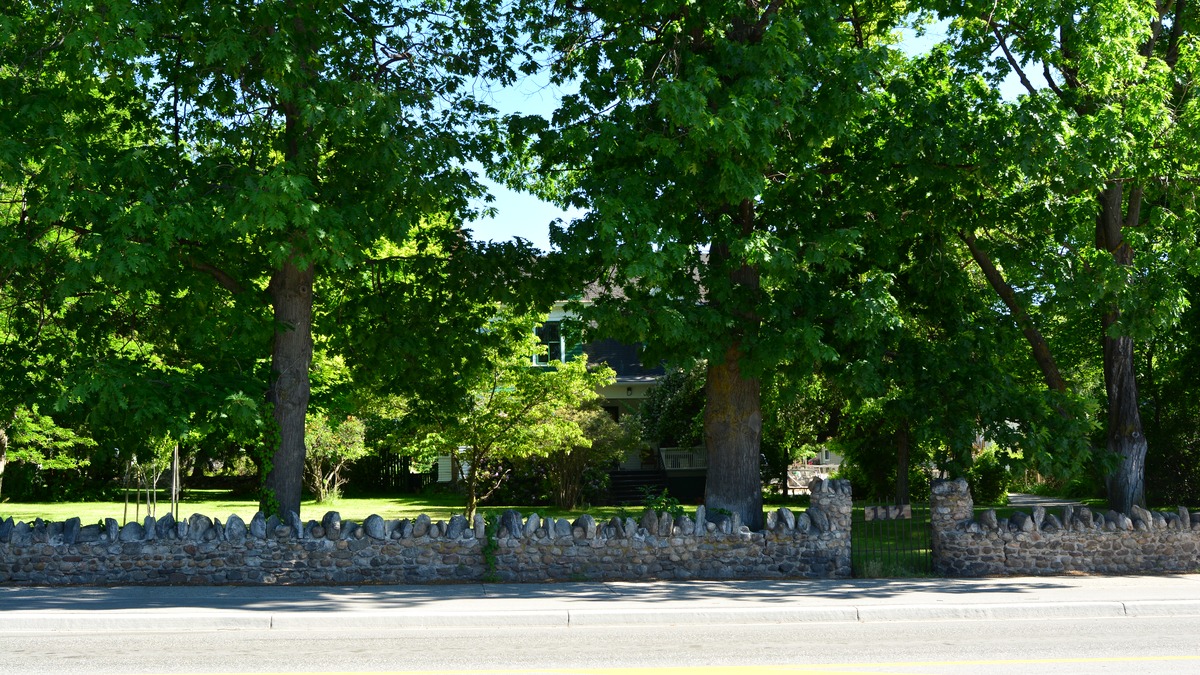
Image credit: Joe Mabel, Wikimedia Commons, CC BY-SA 4.0. Authentic June 6, 2023 photograph of Gibson House at 112 Eckhardt Avenue West in Penticton. Representative local residential architecture only; not a listing, subject sale or property presented as being affected by the tax. Cropped and lightly contrast-adjusted; derivative retained under CC BY-SA 4.0.
Turn the information into your next step
Choose the path that matches the decision you are making now.
Planning a Penticton move? Explore Rico’s Penticton real estate guidance and current listings.