
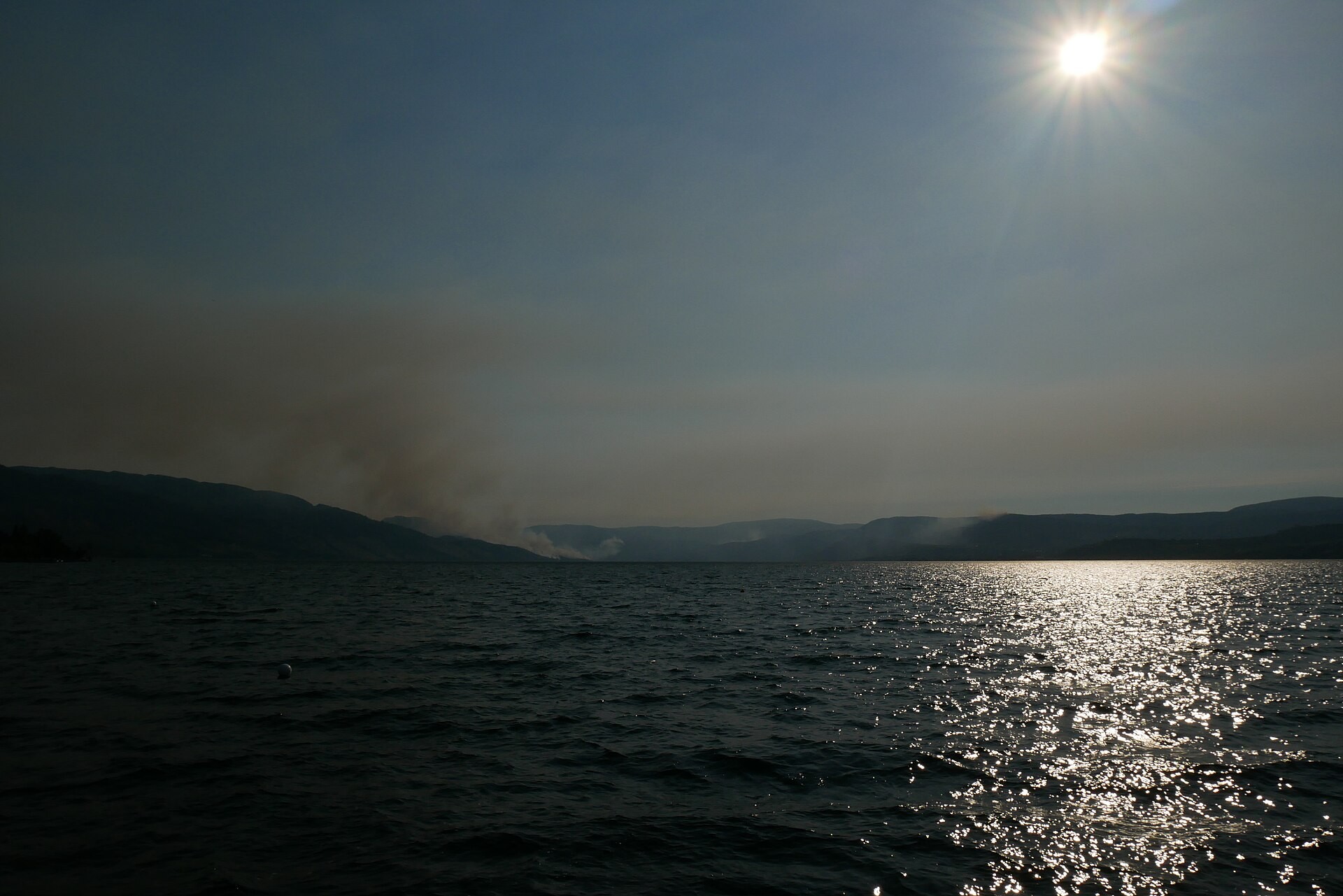
The Association of Interior REALTORS® reported on September 3 that wildfire activity dampened residential demand across the Interior during August, as evacuations displaced families and homes were lost.[1] For a South Okanagan or Similkameen buyer, the practical lesson is not to predict the market from a fire map. It is to confirm that the exact property can be insured on acceptable terms, that financing still works with that coverage, and that the contract addresses what happens if conditions change before completion.
BC Financial Services Authority says mortgage lenders often require fire insurance to approve financing. It recommends obtaining a fire-insurance quote before making an offer and asking whether the policy can be bound in advance, whether that commitment can be revoked if wildfire risk rises, and what happens if a wildfire starts before closing.[3]
B.C. experiences an average of 1,600 wildfires per year; BCFSA’s optional wildfire clause can provide one extension of up to 30 days when wildfire conditions prevent a buyer from obtaining fire coverage; and insurance, financing and contract advice need to be confirmed as separate closing gates.[2][3][4]
WHY NOW
Wildfire conditions can affect a transaction before closing
Wildfire is not an abstract regional talking point. The Association’s August market release said activity slowed in relation to wildfire, while acknowledging evacuations, displacement and home loss.[1] The BC Wildfire Service directs residents to its live map for active-fire details and to EmergencyInfoBC for current evacuation orders and alerts.[2]
Those sources describe changing public conditions. They do not decide whether one insurer will cover one address, whether a lender will fund one mortgage, or whether a buyer can safely remove an insurance or financing condition. Those answers require property-specific confirmation from the insurer, lender and legal adviser.
A map also cannot replace physical due diligence. Two properties in the same community may have different access, slope, vegetation, construction, roof materials, water supply, outbuildings, defensible space and prior-loss histories. A townhome may also involve both the strata corporation’s policy and the buyer’s own unit-owner coverage. A rural home may raise additional questions about private roads, wells, pumps, generators, hydrant distance and fire-protection services.
The right response is calm preparation. A buyer does not need to assume every Okanagan property is uninsurable. A buyer does need to avoid treating a preliminary online quote, an old seller policy or a neighbour’s experience as proof that coverage will be available for the purchase.
INSURANCE
A quote and a binding commitment are not the same step
BCFSA tells buyers to secure a fire-insurance quote before making an offer and to ask whether the policy can be bound in advance. Its consumer guidance also tells buyers to ask whether the commitment can be revoked if wildfire risk increases.[3] BCREA separately explains that a quote summarizes proposed coverage and price, while binding means the insurer has issued the policy to take effect on the agreed date.[5]
That distinction should be made explicit with the insurance professional. Ask for written confirmation of what has actually been approved, the effective date, the named insured, the insured address, deductibles, coverage limits, exclusions and any conditions still outstanding. If possession or completion changes, tell the insurer and obtain updated written confirmation rather than assuming the original dates automatically follow the amended contract.
Coverage also needs to fit the property. The Province says fire, including wildfire, is a standard component of B.C. home-insurance policies, but insurers may temporarily restrict new policies and coverage additions in areas facing an imminent threat. It also notes that flood, overland-water and earthquake coverage are usually optional, and that strata and landlord policies do not replace the personal coverage needed by unit owners or tenants.[6]
Price matters, but the cheapest premium is not automatically the best fit. Compare rebuilding limits, deductibles, additional living expenses, contents, detached structures, sewer backup, overland water and other property-specific features with an insurance professional. Confirm which hazards are covered, limited or excluded. For a strata purchase, review the strata corporation’s current insurance summary and deductible information, then ask how the buyer’s unit-owner policy responds to those deductibles and personal losses.
FINANCING
Insurance and financing must be checked together
An accepted mortgage application is not the same as a guaranteed closing. BCFSA warns that without insurance a lender may withdraw financing even after subjects have been removed.[3] A buyer should therefore ask the lender or mortgage broker exactly what proof of insurance is required, when it must be supplied, and whether any change to coverage, completion date or property condition requires renewed approval.
Rate holds and financing commitments also have expiry dates. BCFSA’s professional guidance says buyers should discuss whether a financing offer can be extended if a wildfire-related contract extension becomes necessary.[4] The point is not that every delay changes a mortgage. It is that buyers should know the date and conditions attached to their own approval before agreeing to a new completion schedule.
- Insurance confirmation. The insurance professional confirms the coverage and effective date in writing.
- Lender confirmation. The lender or mortgage broker confirms that the insurance satisfies financing requirements.
- Contract review. The legal professional reviews the contract, title and any proposed amendment or extension.
- Condition decision. The buyer removes conditions only after understanding what remains at risk between condition removal and completion.
This coordination matters when a purchase depends on the sale of another home, bridge financing, a fixed moving date or possession timed with a tenancy. One extension can affect several linked commitments. BCFSA advises buyers and sellers to obtain legal advice about how triggering a wildfire clause may affect related transactions scheduled for their original dates.[4]
CONTRACT
What BCFSA’s optional wildfire clause can and cannot do
BCFSA has introduced an optional wildfire clause for the Contract of Purchase and Sale. When wildfire conditions prevent the buyer from obtaining property insurance with fire coverage, the clause can allow one extension of the completion, adjustment and possession dates for up to 30 days.[3][4]
It is not an automatic cancellation right, a guarantee that insurance will become available, or a reason to copy language into every offer without advice. BCFSA says the buyer must demonstrate best efforts to obtain insurance. Its guidance points to early contact with insurance professionals, keeping records of attempts, discussing financing timelines and, where appropriate, requesting seller insurance information to explore whether the seller’s insurer may temporarily stay on risk by reissuing coverage in the buyer’s name.[3][4]
Whether that approach is available depends on the insurer and facts. Neither the seller nor the REALTOR® can promise it. The buyer should receive advice on the exact wording and consequences of any insurance or wildfire clause. If a fire or another event damages the property before completion, BCFSA advises both buyers and sellers to seek legal advice immediately.[4]
Contract dates matter. An extension can move completion, adjustment and possession together, affecting movers, utilities, tenancy notices, bridge financing and another purchase. Buyers and sellers should understand who gives notice, what evidence is required, the deadline for exercising the clause and what happens when the extension expires.
PROPERTY REVIEW
Insurance approval does not replace due diligence
Insurance approval should sit alongside, not replace, normal home and land due diligence. Review the inspection, property disclosure information where provided, title, permits, water and septic records where applicable, strata documents, municipal information and any known damage or remediation. Ask direct questions about previous fires, smoke, heat, water used in suppression, claims and repairs, then verify material answers through appropriate documents and professionals.
Look at practical resilience without presenting a visual impression as a professional hazard assessment. FireSmart BC and an insurance professional can help identify mitigation measures. BCFSA recommends emergency and evacuation planning, reviewing deductibles and living-expense coverage, keeping policy documents accessible, and photographing or recording the home and belongings.[3]
The Province recommends understanding local hazards and asking whether wildfire damage, rebuilding, belongings and additional living expenses are covered. It says additional living expenses may include accommodation and other costs when an insured household is displaced under an evacuation order, subject to the policy.[6] Buyers should confirm their actual wording, limits, time periods and deductibles rather than assuming every policy responds identically.
For rural and edge-of-community properties, ask about year-round road access, alternate routes, emergency-service availability, water sources, pumps, vegetation management, propane or fuel storage, and whether detached buildings are included. For strata properties, ask for current insurance information and review recent minutes for claims, remediation, risk work or insurance changes. None of these questions proves that a property is safe or unsafe; together they help professionals assess the actual risk and coverage.
ACTION PLAN
Six practical steps before removing conditions
- Start with the exact address. Give the insurer complete and accurate property information, intended occupancy, completion date and any rental, business, farm or seasonal use.
- Ask what is confirmed in writing. Separate a preliminary estimate from a bound policy or binding commitment, and verify the effective date and any remaining conditions.[3][5]
- Match insurance to financing. Ask the lender what proof and coverage it requires, and obtain confirmation that the proposed policy satisfies those requirements.[3]
- Discuss contract protection. Review insurance conditions and BCFSA’s optional wildfire clause with the REALTOR® and legal professional; do not assume generic wording fits the transaction.[3][4]
- Monitor authoritative public information. Use the BC Wildfire Service map, EmergencyInfoBC and DriveBC for changing fire, evacuation and access information, then ask the insurer how a change affects the specific commitment.[2]
- Keep an evidence file. Save insurer emails, binder documents, lender confirmations, contract dates, inspection material and notes of calls. If conditions change, notify the relevant professionals immediately.
RICO’S VIEW
Verify the address, then connect the professionals
The best time to discover an insurance problem is before an offer becomes unconditional, not in the final days before completion. That does not mean writing off a community because smoke is visible somewhere in the region. It means asking precise questions about the address, documenting the answers and ensuring the insurer, lender and contract are aligned.
South Okanagan and Similkameen homes range from downtown strata units to lakeside properties, acreages and remote rural parcels. One broad assumption will not fit them all. A buyer should know what is covered, what the lender needs, what the contract says and what happens if wildfire conditions or access change before possession.
Use the Explore current homes with the Matchmaker → to organize communities, property types and practical priorities. Insurance, financing, inspection and legal review should then be completed for the exact home before conditions are removed.
This article provides general real-estate and insurance-planning information, not insurance, mortgage, financial, legal, wildfire-risk or emergency advice. Policy wording, underwriting, fire conditions and contract rights can change. Confirm the exact property and transaction with licensed insurance, lending, legal and real-estate professionals, and rely on official emergency sources for current conditions.
Sources
- Association of Interior REALTORS® — August 2026 Interior real estate activity and wildfire impacts
- Province of British Columbia — BC Wildfire Service
- BC Financial Services Authority — Wildfire Risks and Home Insurance: Protect Your Home
- BC Financial Services Authority — Discussing the Wildfire Clause with Clients: Best Practices
- British Columbia Real Estate Association — Five Insurance Tips for Wildfire Season
- Province of British Columbia — Insurance and emergency preparedness
- Wikimedia Commons — 2018 Mount Okanagan and Mount Eneas Forest Fires in Late Afternoon

Image credit: Extemporalist, Wikimedia Commons, CC0 1.0. Historical 2018 Okanagan wildfire photograph; not current 2026 conditions, a hazard assessment or a specific listing.
Turn the information into your next step
Choose the path that matches the decision you are making now.
Planning a Penticton move? Explore Rico’s Penticton real estate guidance and current listings.