“First-time buyer” does not always mean “no property transfer tax.” In B.C., the ordinary tax is based on fair market value when the transfer is registered at the Land Title Office, unless an exemption applies.[1] The first-time home buyers’ program can reduce that bill, but its $835,000 price threshold is not the same thing as a full exemption up to $835,000.[2][3]
That distinction can change a South Okanagan or Similkameen buyer’s cash-to-close plan. A qualifying first-time buyer purchasing a fully eligible $835,000 resale would ordinarily face $14,700 of general property transfer tax, receive an $8,000 exemption and still pay $6,700.[3] At $860,000, the provincial table shows the partial exemption has disappeared and the tax payable is $15,200.[3]
A qualifying newly built principal residence follows a different program. The Province’s current threshold is $1.1 million for a full newly built home exemption, with a partial exemption above that amount and below $1.15 million.[4][5] Buyers comparing a resale, a presale and a completed new home should therefore compare the actual exemption pathway—not just the list prices.
The first-time-buyer price threshold is not the same as a full tax exemption.
THE THRESHOLD
The $835,000 threshold does not erase the whole tax
B.C.’s general property transfer tax starts at 1% on the first $200,000 of fair market value and 2% on the portion above $200,000 through $2 million.[1] The tax is tied to fair market value on registration, not automatically to the amount of the buyer’s down payment, mortgage or deposit.[1]
For a fully eligible first-time buyer, the Province’s current table works in three important bands.[3] At $500,000 or less, the exemption can equal the full general property transfer tax.[3]
Above $500,000 and no higher than $835,000, the exemption is fixed at $8,000, while the underlying tax continues to rise with value.[3] Above $835,000 and below $860,000, that exemption is proportionally reduced; at $860,000 it is zero.[3]
The numbers make the distinction clear. The provincial table shows $8,000 of tax and an $8,000 exemption at $500,000; $12,000 of tax and an $8,000 exemption at $700,000, leaving $4,000 payable; and $14,700 of tax and an $8,000 exemption at $835,000, leaving $6,700 payable.[3]
This is why a search filter marked “first-time-buyer eligible” is not a complete closing-cost calculation. Two homes can both sit within the program’s full value threshold while producing materially different cash requirements. The buyer’s legal professional should confirm the exact tax return and exemption before completion.
ELIGIBILITY
Eligibility belongs to the buyer and the property
At registration, a first-time-buyer applicant must be a Canadian citizen or permanent resident and satisfy the Province’s B.C.-residency or tax-return test.[2] The applicant must never have owned a registered interest in a property that was their principal residence anywhere in the world and must never have received a first-time home buyers’ exemption or refund.[2]
The home must be intended only as the buyer’s principal residence, normally have fair market value of $835,000 or less, be 0.5 hectares or smaller and contain only residential improvements for the full exemption pathway.[2] A property above 0.5 hectares or with another building can have a more limited eligible portion rather than a simple all-or-nothing result.[2][3]
A first purchase is not necessarily a qualifying first-time purchase under these rules. A buyer who previously owned and occupied a principal residence outside Canada may fail the ownership-history test even if this is the first property purchased in B.C.[2] Conversely, a complicated ownership history should be reviewed rather than guessed from labels such as “investor,” “co-signer” or “family property.”
Ask the conveyancer to check citizenship or permanent-resident status, B.C. residency or return history, worldwide principal-residence ownership, any previous exemption, intended occupancy, lot size, improvements and fair market value. These are closing-file facts, not details to leave until the statement of adjustments arrives.
CO-BUYERS
A co-buyer can change the exemption amount
If one purchaser qualifies and another does not, only the qualifying purchaser’s ownership percentage is eligible.[2][3] The Province gives the example of an $835,000 home acquired jointly where only one 50% owner qualifies: the ordinary $14,700 tax is reduced by a $4,000 exemption, leaving $10,700 payable.[3]
That makes ownership shares financially relevant. Adding a parent, partner or other co-buyer can affect the exemption when that person does not meet the first-time-buyer requirements.[2][3] The title structure should follow legal, financing, estate and beneficial-ownership advice; it should not be improvised solely to chase a tax result.
Mortgage qualification and exemption eligibility are separate questions. A lender may require a borrower or guarantor arrangement, while the Province looks at the registered property transfer and each transferee’s eligibility.[2][3] Before writing an offer, buyers should ask the lender, conveyancer and tax authority questions early enough to understand whether the proposed title structure changes cash required at closing.
Parents helping with a purchase should also distinguish a gift of money from acquiring a registered interest. The source of the down payment, the borrowers on the mortgage and the owners on title can overlap, but they are not automatically the same legal roles. Independent legal and tax advice is appropriate where family contributions or beneficial interests are involved.
NEW HOMES
New homes use a different exemption
The newly built home exemption applies to qualifying purchases of a principal residence and is not described by the Province as a first-time-only program.[4] It can cover a newly constructed house or condo that has not been occupied since construction, certain manufactured homes placed on vacant land, a qualifying relocated house, and some residential conversions.[4]
For property registered on or after April 1, 2024, a qualifying newly built home at or below $1.1 million can receive an exemption equal to the general property transfer tax.[4][5]
The exemption phases out when fair market value is more than $1.1 million and less than $1.15 million; at $1.15 million, the Province’s table shows $21,000 payable and no exemption.[4][5]
The contrast can be significant. The provincial table shows a fully eligible newly built home at $1.1 million with $20,000 of general property transfer tax and a matching $20,000 exemption.[5] A resale at the same price would not fit the first-time-buyer value threshold, so a first-time-buyer label alone does not produce the same result.[2][3]
Do not assume every recently completed or never-lived-in-looking home qualifies. The program includes registration, first-registration, citizenship or permanent-resident, principal-residence, lot-size and occupancy conditions.[4] A presale buyer should have the legal professional confirm the property’s status and exemption code before relying on the projected saving in a financing plan.
AFTER CLOSING
The first year still matters after closing
For an existing home under the first-time-buyer program, the purchaser must move in within 92 days of registration and continuously occupy the property as a principal residence through the first anniversary to keep the full exemption, subject to the Province’s stated exceptions and partial-retention rules.[2] The newly built home exemption also requires a move within 92 days and principal-residence occupancy for the remainder of the first year.[4]
That timeline can matter when a property has a tenant, needs major work, is bought before a job relocation, or will be shared between family members. Buyers should reconcile possession, tenancy, renovation and moving plans with the occupancy rules before claiming an exemption.[2][4]
If circumstances change after closing, contact the Province and the legal professional instead of assuming the exemption is permanently secured. Moving out early can trigger repayment of part of the exemption, while death and certain transfers under a separation agreement or court order receive specific treatment.[2][4]
Keep the registration documents, exemption return, proof of move-in and evidence that the home was occupied as the principal residence. A calendar reminder for the 92-day and first-anniversary milestones is a simple control when thousands of dollars depend on continuing qualification.
AUDIENCE GUIDE
What this means for you
ACTION PLAN
Seven checks before writing the offer
- Estimate the ordinary tax. Start with fair market value and the Province’s current rates, not the mortgage amount.[1]
- Identify the correct program. Determine whether the purchase is an existing home under the first-time-buyer program or a qualifying newly built home under its separate exemption.[2][4]
- Check every buyer. Confirm each proposed owner’s eligibility and ownership percentage before finalizing the title plan.[2][3]
- Test the price band. Do not confuse the $835,000 first-time-buyer threshold with a full tax exemption; review the payable amount at the exact value.[3]
- Confirm the property. Review lot size, non-residential improvements, prior occupancy and whether the home will be used only as a principal residence.[2][4]
- Plan the first year. Make sure possession, tenancy, renovation and moving plans can meet the 92-day and first-anniversary occupancy requirements.[2][4]
- Protect the cash buffer. Keep closing funds separate from the down payment and leave room for legal fees, adjustments, inspections, insurance and lender-required costs.
A useful offer-day question is not simply, “Do I qualify?” It is, “What exact tax will appear on my completion statement under this ownership structure, property type, value and registration date?” The legal professional can then apply the current rules to the real transaction rather than to a rough online scenario.
RICO’S VIEW
Rico’s practical read
The most surprising number is $6,700. A fully eligible first-time buyer at the $835,000 threshold can still owe that much property transfer tax because the program exempts no more than $8,000 in that price band.[3] Calling the home “under the exemption limit” without explaining the remaining tax creates a misleading budget.
The second useful fact is the new-home contrast. A qualifying newly built principal residence can receive a full exemption at a much higher value—up to $1.1 million under the current program—but that route carries its own property, registration and occupancy tests.[4][5] New is not automatically better, and resale is not automatically cheaper; compare purchase price, tax, GST where applicable, strata costs, warranties, deposits, completion risk and financing as separate lines.
For South Okanagan and Similkameen buyers, the practical move is to choose a comfortable all-in budget before falling in love with a listing. The Property Matchmaker can organize the search around location, property type and price. Owners preparing to sell can start with the Sell page. For a property-specific conversation, contact Rico.
This article provides general real-estate information, not legal, tax, accounting, lending, appraisal or investment advice. Programs, values and personal circumstances can change. Have your legal professional confirm eligibility, fair market value, ownership shares, registration treatment, exemption amount and occupancy obligations, and have your lender confirm qualification and closing-fund requirements before acting.
Sources
- Province of B.C. — Property transfer tax and rates
- Province of B.C. — First time home buyers’ program
- Province of B.C. — First-time-buyer exemption amounts
- Province of B.C. — Newly built home exemption
- Province of B.C. — Newly built home exemption amounts
- Wikimedia Commons — Street of Penticton
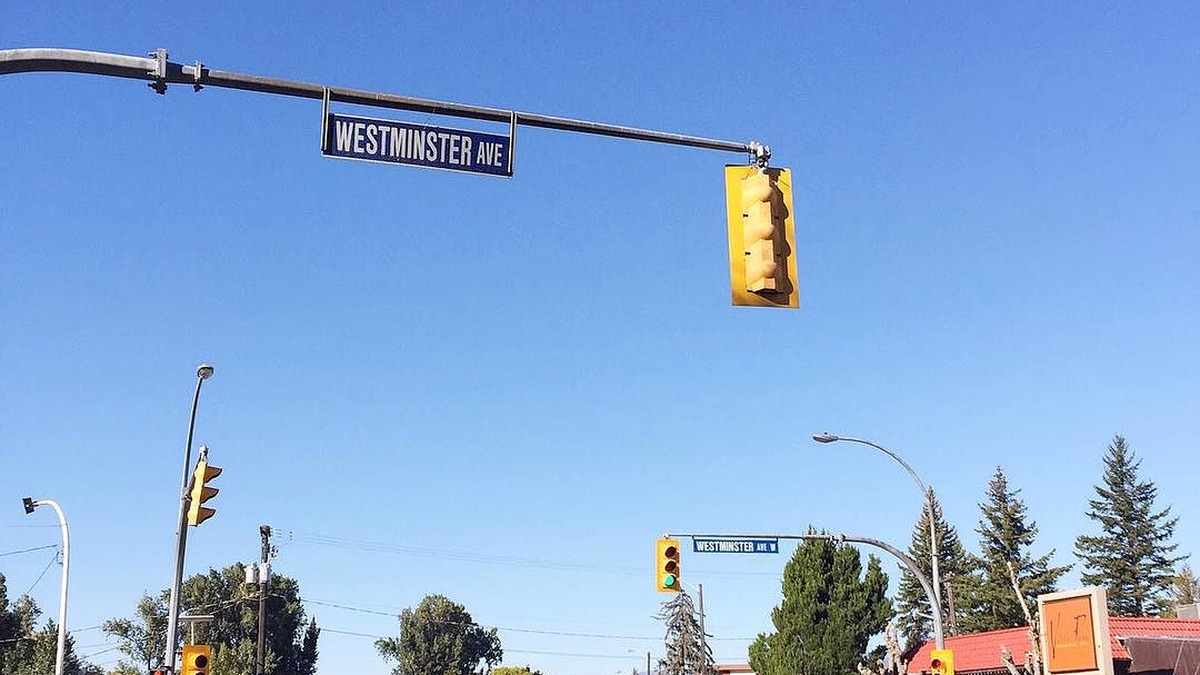
Image credit: Voyages etc. (Adeline Gressin), Wikimedia Commons, CC BY 2.0. Authentic October 1, 2015 street photograph at Westminster Avenue in Penticton. Representative community context only; not a listing, subject purchase or home presented as qualifying for an exemption. Cropped, lightly contrast-adjusted and resized.
Turn the information into your next step
Choose the path that matches the decision you are making now.
Planning a Penticton move? Explore Rico’s Penticton real estate guidance and current listings.