
The Bank of Canada’s September 24 speech added a useful caution to the September 2 policy-rate hold: one interest-rate headline does not settle a household’s mortgage or property budget. The Bank said prolonged conflict in the Middle East had pushed oil prices and fuel costs higher, while global and Canadian bond yields had also risen.[1]
For South Okanagan and Similkameen buyers, sellers and homeowners, the practical message is not to guess the Bank’s next move. It is to test a property decision against more than one financing and operating-cost scenario. Local value still depends on comparable sales, active competition, property condition and location—not a national speech or one day’s bond yield.
One policy rate. Several financing and household-cost clocks.
LATEST SIGNAL
What changed in the September 24 message
The Bank described an economy being pulled in opposite directions. Renewed trade uncertainty could restrain growth, while higher oil prices and damaged refining capacity could keep inflation elevated. It said that if oil stayed near US$100 per barrel, inflation would be expected to edge up in coming months.[1]
The speech also said bond yields had risen as governments and businesses borrowed more and markets increasingly expected major central banks to raise policy rates. Canadian yields remained below U.S. yields, but they had moved higher as well.[1]
That is a risk assessment, not a rate promise. The Bank said it would assess whether the current policy rate balanced the inflation outlook and was prepared to adjust policy as needed. Its objective remains inflation near the 2% target.[1]
The distinction matters because a policy-rate hold can coexist with movement in market yields, lender pricing and household costs. Buyers should not treat “the Bank held” as proof that every mortgage quote will be unchanged, and sellers should not translate it into a claim that buyer purchasing power has improved.
RATE CLOCKS
Keep three rate clocks separate
The policy rate, a lender’s prime rate and a particular fixed mortgage offer are related, but they are not interchangeable.
Variable-rate mortgages usually respond more directly to lender prime-rate changes. Fixed mortgage pricing is influenced by funding markets, term, borrower and property risk, competition and lender policy. A quoted rate is therefore a product-specific offer, not the policy rate printed on a Bank of Canada page.
The Bank’s Daily Digest showed the prime rate at 4.45% on September 23 and reported selected Government of Canada bond yields separately.[2] Those are national reference points. They are not an advertised mortgage contract and do not include a lender’s spread, fees, qualification criteria or property review.
When comparing financing, ask for the same mortgage amount, amortization, term, payment frequency, prepayment features and rate-hold period. A lower headline rate attached to a different product can be a poor comparison.
INFLATION SCOPE
Put the inflation numbers in their proper scope
Statistics Canada reported that the national CPI rose 3.0% year over year in August. Shelter increased 1.5%, transportation 7.5% and gasoline 22.8% nationally over the same period. Gasoline was down 0.9% from July, showing why monthly and annual comparisons can point in different directions.[5]
These are basket-level national measures. They do not report the exact change in a Penticton homeowner’s mortgage payment, an Osoyoos commuter’s fuel bill or a Keremeos property’s insurance premium. Household costs vary with debt, vehicle use, heating source, commuting, maintenance, insurance, utilities and the property itself.
A national inflation release also does not create or erase homeowner equity. Equity is the current property value minus debt secured against the property. Current value should be assessed from local comparable sales, current competition, property condition and property-specific evidence. A macro release is not an appraisal.
For owners considering refinancing or home-equity borrowing, gross equity is not the same as available credit. The lender applies its own appraisal, qualification, loan-to-value and product criteria. Ask the lender or mortgage broker to calculate the actual options and costs.
BUYER BUDGET
Build a buyer budget that survives change
A purchase budget should include more than the payment generated by today’s best quote. Model at least three cases: the current offer, a moderately higher rate at renewal, and a higher monthly operating-cost case. The purpose is not to forecast; it is to expose whether the decision has enough room.
Include property tax, strata fees where applicable, insurance, utilities, water and sewer charges, heating, transportation, maintenance and a reserve for irregular work. For rural properties, add realistic allowances for wells, septic systems, private roads, pumps, outbuildings and longer travel distances where relevant.
If buying a presale or a home under construction, test the timing risks separately: deposit and closing funds, rate-hold expiry, appraisal at completion, construction or completion delay, and possible requalification. A current pre-approval may not remain valid through every future date or change in circumstances.
The Financial Consumer Agency of Canada advises borrowers to consider whether their budget could handle higher payments. It distinguishes fixed rates, which stay the same for the term, from variable rates, which can change during the term, and warns that fixed-payment variable mortgages can direct more of each payment to interest as rates rise.[4]
Keep financing conditions open until the lender has reviewed the exact property and all required documents. An attractive rate advertisement is not final mortgage approval.
RENEWAL PLANNING
Start renewal work before the letter arrives
FCAC advises borrowers to start shopping a few months before the end of the mortgage term rather than waiting for the renewal letter. A borrower does not have to renew with the same lender, although a new lender must approve the application and switching can involve discharge, registration, transfer, appraisal or administrative costs.[3]
For a mortgage with a federally regulated financial institution, the lender must provide a renewal statement at least 21 days before the end of the term. The statement must include the remaining principal, interest rate, payment frequency, term, and applicable charges or fees.[3]
Use the early window to collect income documents, review credit, confirm how the mortgage is registered and ask about prepayment privileges. Compare the total economics, not only the rate. Portability, penalties, collateral-charge implications, conversion features and flexibility can matter if a sale, move or refinance is plausible.
Do not let an automatic renewal make the decision by default. FCAC notes that an automatic renewal may not provide the best rate and conditions.[3]
PROPERTY EVIDENCE
What sellers and homeowners should avoid assuming
Sellers should not market a home as “more affordable because rates are on hold” or promise a buyer’s payment. Different buyers receive different terms and qualification outcomes, and the lender evaluates the borrower and property.
Price and presentation should respond to local evidence: recent comparable sales, current competing listings, days on market, condition and the likely buyer pool. A national inflation or bond-yield story can influence sentiment and financing, but it does not set a property’s market value.
Homeowners planning renovations should compare the work’s purpose, full cost and financing structure. A project funded from savings, a line of credit, refinancing or a mortgage advance can carry very different risk. Get written quotes, preserve contingency funds and ask the lender or mortgage broker how the financing affects payments and qualification.
Investors should stress-test debt service, vacancy, repairs, insurance, property tax, utilities and management. Do not use an expected future rate cut to make a marginal property appear viable today.
PRACTICAL EFFECT
What this means for you
NEXT STEPS
A practical next-step checklist
- Record your mortgage balance, payment, rate type, term end date and remaining amortization.
- Ask the lender or broker for comparable fixed and variable scenarios with the same assumptions.
- Calculate the payment at today’s offer and at a moderately higher renewal rate.
- Add realistic property tax, insurance, utilities, transportation, strata and maintenance costs.
- For a purchase, keep the financing review tied to the exact property and completion date.
- For a renewal, begin shopping a few months early and compare switching costs and product features.
- For a sale, review local comparables and active competition instead of relying on national headlines.
- Recheck the Bank of Canada decision and your lender’s written offer before making a binding decision.
The September 24 speech does not prove that mortgage rates will rise, that the policy rate will change next, or that South Okanagan property values will move in one direction. It does show why a resilient real-estate plan separates the national policy signal, the lender’s actual offer, local property evidence and the household’s complete budget.
Use the guided Matchmaker to compare property options. If financing conditions may affect your timing, visit Sell, or contact Rico for a property-specific real-estate conversation.
This article provides general real-estate information, not mortgage, lending, investment, appraisal, tax, legal or financial advice. Rates, qualification and product terms are lender-specific and can change. Confirm financing decisions with your lender or licensed mortgage broker.
Sources
- Bank of Canada — Navigating uncertainty and adapting to change
- Bank of Canada — Daily Digest
- Financial Consumer Agency of Canada — Renewing your mortgage
- Financial Consumer Agency of Canada — Interest on mortgages
- Statistics Canada — Consumer Price Index, August 2026
- Wikimedia Commons — Naramata Right Lane

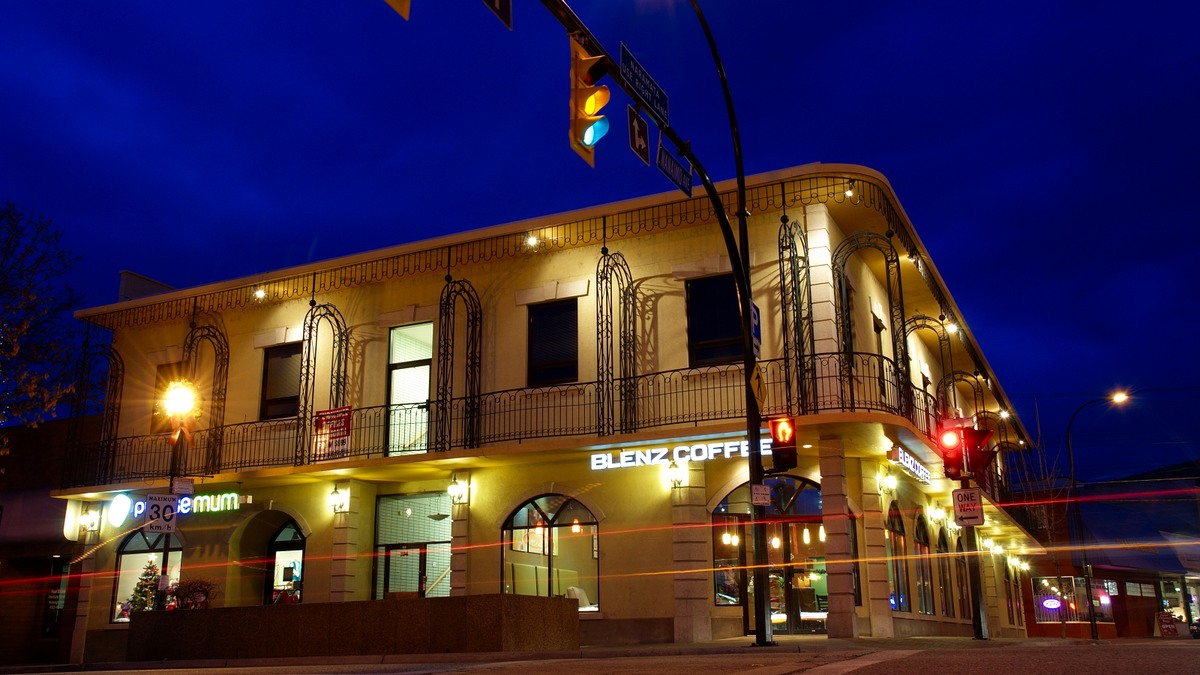
Image credit: Darren Kirby, Wikimedia Commons, CC BY-SA 2.0. Naramata Right Lane in Penticton; representative local streetscape, not a listing, lender or depiction of current rates. Cropped and lightly contrast-adjusted; derivative retained under CC BY-SA 2.0.
Turn the information into your next step
Choose the path that matches the decision you are making now.
Planning a Penticton move? Explore Rico’s Penticton real estate guidance and current listings.