
As cooler nights return to the South Okanagan and Similkameen, homeowners may be comparing insulation, windows, heat pumps and water-heating upgrades. The important first step is not choosing equipment. It is identifying the correct rebate stream before signing a contract.
For eligible electrically heated homes, BC Hydro’s Home Renovation Rebate Program currently advertises up to $12,500 across eligible efficiency upgrades: up to $4,000 for a heat pump, $5,500 for insulation, $2,000 for windows and doors, and $1,000 for a heat-pump water heater.[1] Those are separate program maximums, not a promise that every home qualifies for all four or that the full amount will be paid.
Income-qualified households may have different—and sometimes larger—options. The CleanBC Energy Savings Program lists heat-pump rebates up to $13,000 for qualifying ground-oriented homes, while the Energy Conservation Assistance Program offers free assessments, coaching and selected upgrades to eligible households.[2][3] The right route depends on income, property type, assessed value, utility account, existing heating system and planned work.
Three separate program scopes—never one stackable rebate total.
RENOVATION PLANNING
Start with the program, not the product
The rebate landscape is easy to misread because several programs cover similar equipment but apply different rules. The Home Renovation Rebate Program is open to B.C. households at any income level, subject to its property, utility, fuel, equipment and contractor requirements.[4] The Energy Savings Program is income-qualified and uses household size, combined pre-tax adult income and assessed property value to determine the available level.[3] ECAP is also income-qualified, but the program chooses the products and contractors and provides approved work at no cost.[2]
That distinction affects the entire renovation sequence. Under the standard program, a homeowner typically confirms eligibility, obtains quotes from program contractors, completes eligible work and applies within six months.[4] Under the Energy Savings Program, the published sequence starts with pre-registration and an eligibility code, followed by quotes from registered contractors; the contractor receives the rebate and the homeowner pays the remaining eligible cost.[3]
Signing first and checking later can be expensive. A good quote should identify the program, eligible equipment, required contractor status, permits, documentation, application deadline, expected rebate and the amount the homeowner must still pay. “Rebate eligible” should never be treated as equivalent to “rebate approved.”
RENOVATION PLANNING
Penticton and Summerland utility customers need the correct door
Penticton and Summerland operate municipal electric utilities, so local homeowners should not assume that every application goes through BC Hydro. Better Homes says FortisBC’s application route serves FortisBC customers as well as Grand Forks, Summerland, Penticton and Nelson electricity customers.[4] The ECAP page gives the same direction for those municipal-electricity customers.[2]
The heating fuel matters separately from the company on the electricity bill. An electrically heated home, a natural-gas home and an oil- or propane-heated home switching to electricity may fall under different funding streams. BC Hydro specifically says rebate offers vary by primary heating source and directs income-qualified customers to the Energy Savings Program regardless of the home’s main heating system.[1]
Before requesting quotes, record the exact utility account holder, electricity provider, main space-heating fuel, water-heating fuel, home type, age and whether the unit is individually metered. That simple inventory prevents a contractor from pricing around the wrong program assumptions.
RENOVATION PLANNING
Property type changes eligibility
The standard Home Renovation Rebate Program generally requires a year-round primary residence at least 12 months old and a residential electricity account with BC Hydro, FortisBC or a participating municipal utility.[4] The BC Hydro page says its standard electric-home program is not available to condo or apartment units and points those residents to a separate Condo and Apartment Rebate Program.[1]
Income-qualified programs also separate ground-oriented homes from multi-unit buildings. The Energy Savings Program currently lists up to $5,000 for an eligible condo or apartment heat pump and up to $3,500 for an eligible heat-pump water heater, while its ground-oriented program has a different set of maximums and requirements.[3]
This matters to buyers. A townhouse with its own exterior entrance and individual meter may be treated differently from an apartment-style strata unit with a central account. A utility account in the name of a strata corporation or landlord may not qualify under the general individual-home rules.[2][3][4] Buyers should verify the exact unit configuration and account arrangement rather than relying on the building’s marketing description.
A planned addition, garage conversion or major reconstruction can also fall outside ordinary retrofit rules. Rebate eligibility does not replace municipal permits, strata approval, electrical capacity checks, insurance review or professional building advice.
RENOVATION PLANNING
The largest headline is rarely the usable budget
The standard electric-home maximums are useful for orientation, but each category has technical conditions. BC Hydro lists up to $4,000 for heat pumps, $5,500 for insulation, $2,000 for windows and doors, and $1,000 for heat-pump water heaters.[1] Equipment must fit the relevant product and installation rules, and most rebates require a program-registered contractor.[4]
Income-qualified homeowners should compare the Energy Savings Program and ECAP before choosing the standard route. ECAP provides free approved upgrades, but the program representative decides which products and contractors are used.[2] The Energy Savings Program offers more homeowner choice from qualified lists, but the contractor receives the rebate and the homeowner pays the balance.[2][3]
FortisBC’s separate income-qualified window and door offer illustrates how specific the gate can be. It advertises up to $750 per eligible opening and a maximum of $7,500 per home, but requires income qualification, an eligible primarily electrically heated home, qualifying products, professional installation and an application within six months of the invoice.[5] That is not the same product as the standard $2,000 window-and-door maximum, and the programs cannot simply be combined.
Build the renovation budget using the contractor’s full price before rebate, the amount that must be paid before reimbursement, financing costs if any, possible electrical or envelope work, permits, taxes and a contingency. Treat the rebate as conditional until the administrator confirms eligibility and the application is accepted.
RENOVATION PLANNING
Timing and documentation are part of the renovation
The standard Better Homes process says to review requirements, obtain quotes from program contractors, install the upgrade and apply within six months.[4] The Energy Savings Program instead requires pre-registration, an eligibility code and a registered contractor; its current page says the code is valid for three months.[3]
Keep a complete file from the first call: eligibility confirmation, program code, contractor credentials, product model and qualifying-list evidence, permits, invoices, proof of payment, photos, commissioning records and correspondence. Ask who is responsible for submitting each item and what happens if equipment changes because of availability.
Homeowners should also compare at least two or three complete quotes where practical. The lowest equipment price may not include electrical work, disposal, permits, controls, duct changes, condensate management, drywall repair or warranty terms. A higher-efficiency system can still perform poorly if it is badly sized or installed.
For a purchase in progress, do not assume the seller’s planned rebate transfers to the buyer. Program eligibility, invoices, account names and primary-residence requirements may be personal to the applicant. Confirm what work is complete, what has been paid, whether an application was submitted and whether any rebate or financing obligation remains.
RENOVATION PLANNING
What this means for you
The Province’s June expansion announcement says ECAP is supported by a $222-million joint investment and is intended to expand no-cost retrofits for eligible lower-income households, including heat pumps, dual-fuel systems, insulation and weatherization.[6] That is provincial program funding, not an amount available to one household and not evidence that every proposed project will be approved.
RENOVATION PLANNING
A seven-step South Okanagan renovation check
- Define the problem. Is the priority winter comfort, summer cooling, high bills, drafts, aging equipment, moisture, accessibility or resale preparation?
- Identify the utility and fuels. Record the electricity provider, gas provider, main space-heating fuel and water-heating fuel.
- Classify the home. Confirm age, primary-residence use, ground-oriented or apartment form, metering and account holder.
- Check programs before quotes. Compare the standard Home Renovation Rebate Program, the income-qualified Energy Savings Program, ECAP and any condo or whole-building stream.
- Use the required contractor path. Confirm registration, equipment qualification, permits and documentation before paying a deposit.
- Budget without stacking assumptions. Use the full contract price, then show each conditional rebate separately. Never add incompatible program maximums.
- Preserve the property record. Keep approvals, permits, invoices, manuals, warranties, photos and final application receipts for future insurance, maintenance and resale questions.
An energy upgrade can improve comfort and reduce energy use, but it is still a property-specific capital decision. Rebates can improve the economics only when the home, household, equipment, contractor and sequence all meet the current rules.
Use the guided Matchmaker to include heating, property type and renovation priorities in your search. If you are preparing to sell, visit Sell, or contact Rico for a property-specific real-estate conversation.
This article provides general real-estate information, not construction, engineering, energy, lending, tax, legal, insurance, appraisal, investment or financial advice. Rebate availability, funding, amounts, eligibility and deadlines can change. Confirm the current written rules with the program administrator and obtain qualified advice for the property and project.
Sources
- BC Hydro — Home renovation rebates
- Better Homes BC — Energy Conservation Assistance Program
- Better Homes BC — Energy Savings Program
- Better Homes BC — Home Renovation Rebate Program
- FortisBC — Income-qualified window and door rebates
- Province of British Columbia — ECAP expansion announcement
- Wikimedia Commons — Penticton Gibson House photograph

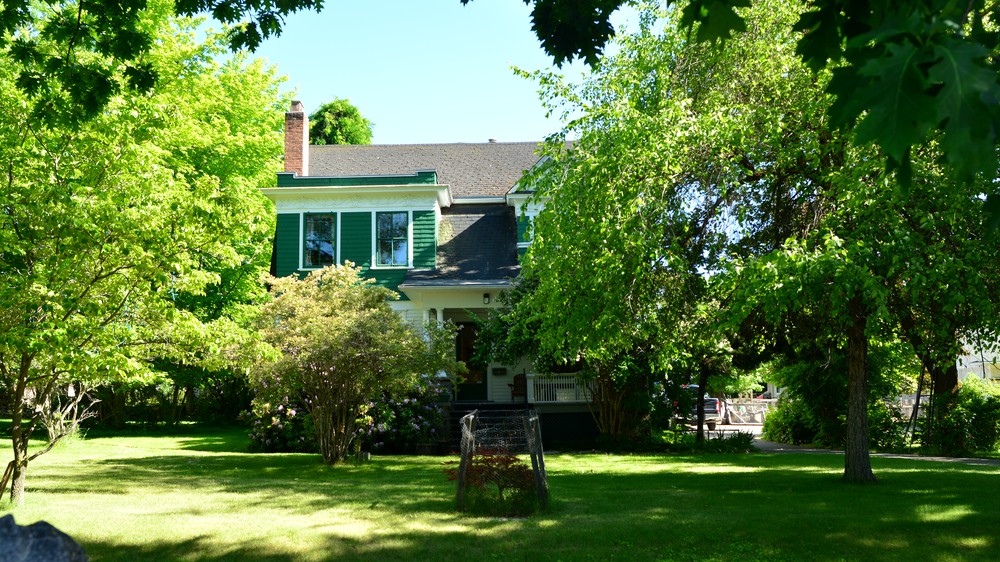
Image credit: Joe Mabel, Wikimedia Commons, CC BY-SA 4.0. Gibson House in Penticton; representative local architecture, not a listing or a specific rebate project. Cropped derivative licensed CC BY-SA 4.0.
Turn the information into your next step
Choose the path that matches the decision you are making now.
Planning a Penticton move? Explore Rico’s Penticton real estate guidance and current listings.